Publications

Why Our Publications Matter

We provide in-depth analyses on cutting-edge research that can inform and elevate your understanding of modern challenges. Our team is dedicated to exploring topics that shape the future, making us a reliable resource for insights and knowledge.

Publications 2026

Combining DNA nanotechnology with peptide and protein assembly provides complementary platforms for the rational engineering of functional biomaterials. This Perspective discusses the emerging field of self-assembling DNA-peptide and DNA-protein hybrid systems that combine the structural precision and programmability of DNA nanotechnology with the functional diversity of peptides and proteins.


DNA Nanotechnology Meets Peptide and Protein Self-Assembly

Marcel Hanke, Nanjundan Raghul, Adrian Keller, Veikko Linko, Verónica I. Dodero

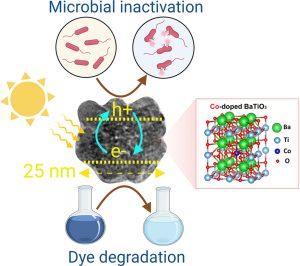
Sonochemical synthesis of cobalt-doped barium titane nanoparticles for visible-light applications: catalytic and antimicrobial properties

Ziba Dargahi,  Wojciech Marynowski,  Ehsan Moradpur-Tari, Sada Raza, Rafał Zbonikowski, Ali Akbari-Fakhrabadi, Janusz Lewiński,
Hossein Maleki-Ghaleh, Jan Paczesny

Cobalt-doped barium titanate (Co-doped BaTiO₃, Co-BTO) nanoparticles are synthesized via a sonochemical method to develop visible-light-active perovskite photocatalysts with enhanced catalytic and antimicrobial performance. 
 

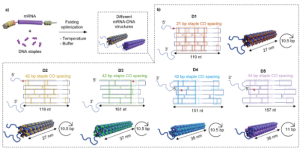
In this insight, we briefly summarize the evolution of DNA and RNA nanostructures and focus on the recently reported hybrid RNA/DNA origami, their design principles/parameters, properties, and their potential use in gene delivery.


Hybrid RNA/DNA origami nanostructures

Olavi Reinsalu, Pranya Nepoliyan, Sven Oras, Veikko Linko
 

Here, we investigated the effects of applied voltage, DNA concentration, and buffer composition on translocation kinetics of a circular 7560-nucleotide single-stranded DNA and the current blockage characteristics. 


DNA origami nanoparticles (DONs) are attractive nanocarriers of controllable size, shape and addressability that have potential for treating eye diseases by overcoming ocular barriers. However, suboptimal physiological stability and poor cell uptake due to the negative charge may limit their use

DNA origami uptake in Y-79 retinoblastoma cells driven by oligolysine coating

Anna Klose, Zahra Gounani, Sergei Raik, Artturi Koivuniemi,Sonja Korhonen, Mika Reinisalo, Tatu Lajunen, Veikko Linko, Timo Laaksonen
 

This study shows that Lu₂Yb₂Tm₂Er₂O₁₂ is a promising multicomponent rare-earth oxide for dye removal and provides insight into the optical and electronic behavior of this oxide family.

Here, we propose a physics-guided optimization model for
extracting STM imaging parameters, including tip shape,
thermal drift, depth of field, current, and height.


Publications 2025

Modular Virus Capsid Coatings for Biocatalytic DNA Origami Nanoreactors

Iris Seitz, Donna McNeale, Frank Sainsbury, Veikko Linko, Mauri A. Kostiainen

Protein cages and custom DNA structures have emerged as self-assembling nanocompartments to sequester enzymes and mimic the compartmentalization of naturally occurring biocatalytic reactions.

PDF


Folding of mRNA-DNA Origami for Controlled Translation and Viral Vector Packaging

Iris Seitz, Sharon Saarinen, Julia Wierzchowiecka, Esa-Pekka Kumpula, Boxuan Shen, Jeroen J. L. M. Cornelissen, Veikko Linko, Juha T. Huiskonen, Mauri A. Kostiainen

The work provides valuable insight into the design of
mRNA-DNA origami structurescontributing to the
development of mRNA-based gene delivery platforms
PDF 

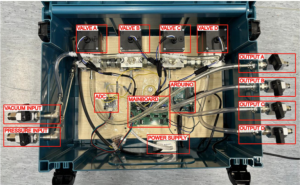
Low-Cost, Programmable, Pressure-Based Flow Controller for Multi-Channel Microfluidics

Mart Ernits, Olavi Reinsalu, Andreas Kyritsakis, Veikko Linko, Veronika Zadin

The main features of the device is compared to commercially and non-commercially available alternatives and further demonstrates the device’s performance and accessibility in successful microfluidic hydrodynamic focusing (MHF)-based synthesis of large unilamellar vesicles (LUVs).

keywords: pressure controller; microfluidics; Arduino; liposomes
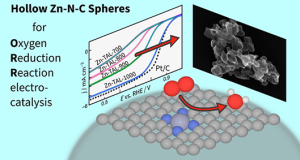
Pyrolytic Transformation of Zn-TAL Metal–Organic Framework into Hollow Zn–N–C Spheres for Improved Oxygen Reduction Reaction Catalysis

Gulnara Yusibova, John C. Douglin, Iuliia Vetik, Jekaterina Pozdnjakova, Kefeng Ping, Jaan Aruväli, Arvo Kikas, Vambola Kisand, Maike Käärik, Jaan Leis, Tiit Kaljuvee, Peeter Paaver, Sven Oras, Łukasz Ciupiński, Tomasz Plocinski, Marina Konuhova, Anatoli I. Popov, Dario R. Dekel, Vladislav Ivaništšev, Nadezda Kongi

This study examines the transformation of a Zn-based MOF into an M–N–C electrocatalyst, focusing on the preservation of the carbon framework and the prevention of Zn aggregation during pyrolysis.

PDF

keywords: